

Kubota North America Corporation

Smarter Asset Tracking & Maintenance How Kubota leveraged Tavant’s IoT-powered TMAP to reduce downtime, optimize performance, and boost dealer & customer satisfaction.
Impact of Tariffs on U.S. Agriculture: What Lies Ahead

Understanding the Impact of Tariffs on U.S. Agriculture: A Data-Driven Look at the Past Year and What May Lie Ahead Trade policy has quietly become one of the biggest forces reshaping the farm economy over the last twelve months. People disagree, often sharply, about whether tariffs are good policy. But set that debate aside for a moment, and the underlying data tells a fairly consistent story about what’s actually happened to growers, commodity markets, the wider agricultural ecosystem, and what’s worth watching next. The numbers below come from USDA, university extension research, and independent economic analysis. Farm Income: Pressure Continues, With Government Support Playing a Larger Role USDA now projects net farm income at $153.4 billion for 2026. That’s down slightly from 2025, and roughly 24% below the 2022 peak of $186 billion. What stands out this year is how much of that income is coming from Washington rather than the market: federal payments are expected to account for nearly 29% of net farm income in 2026, compared with about 12% in a normal year. Strip out those payments, and market-based income falls closer to $109 billion. The American Farm Bureau Federation has called this a fourth consecutive year of financial strain across the sector. More and more producers are leaning on debt just to keep cash flowing. Farm Debt and Bankruptcy Filings Have Risen That debt reliance shows up clearly in the numbers. Total U.S. farm sector debt is projected to hit a record $624.7 billion in 2026, that’s up about 5% for the second year running with interest expenses across the sector reaching roughly $33 billion. Chapter 12 family farm bankruptcy filings jumped 46% in 2025, to 315 cases, the highest count since 2020. Most of those filings came out of the Midwest and Southeast. Arkansas had its worst year this century by this measure, and rice growers there reported per-acre losses topping $200 even after factoring in supplemental assistance, a reminder that support hasn’t landed evenly across commodities or regions. Soybeans: A Commodity Especially Exposed to Trade Shifts No crop illustrates the trade story better than soybeans. China has historically bought more than half of all U.S. soybean exports, so when new tariffs and countertariffs took hold in 2025, Chinese purchases slowed sharply for months as buyers turned to Brazilian and Argentine supply instead. North Dakota State University put a number on the damage: roughly $14.9 billion in reduced U.S. agricultural export sales between March 2025 and February 2026, with soybeans absorbing the largest share. Then, in November 2025, China agreed to buy at least 25 million metric tons of U.S. soybeans annually through 2028. Even so, Purdue researchers estimate full-year 2025 exports to China will likely land around 18 million metric tons, which is still about 33% below 2024 levels, though a real improvement from the mid-year low. For some historical perspective: the 2018-2020 trade dispute is estimated to have cost the sector more than $27 billion in soybean export value alone, a figure industry groups keep referencing as a benchmark for how this round compares. Federal Support: A $12 Billion Bridge Program In December 2025, USDA rolled out the Farmer Bridge Assistance (FBA) Program: $12 billion in support, split between $11 billion in direct per-acre payments to row-crop producers and $1 billion for specialty crop growers. The goal was to help offset 2025 trade disruptions and rising input costs. Payment rates varied quite a bit by commodity – $132.89 per acre for rice, $117.35 for cotton, $81.75 for oats, $48.11 for sorghum, $44.36 for corn, $39.35 for wheat, and $30.88 for soybeans. Groups like the American Soybean Association welcomed the help, but flagged that the soybean rate specifically may not cover the losses their growers actually experienced. Independent economists put total 2025 trade-related income losses somewhere between $35 and $44 billion, which suggests the program closed a meaningful gap without closing all of it. A few analysts have also pointed out that because the formula is acreage-based, it tends to favor the largest operations. Input Costs Rose Alongside Export Uncertainty Growers weren’t just dealing with softer export demand but costs were climbing too. Tariffs touching fertilizer, steel, and machinery components helped push 2026 fertilizer prices 10-15% above 2025 levels, with nitrogen products seeing the steepest increases. An NDSU trade analysis found a U.S.-Canada fertilizer price gap exceeding $170 per metric ton, and noted that retail prices sometimes rose by more than the tariff itself would suggest a pattern researchers tied to market uncertainty and supply-chain adjustment as much as the tariff line item. Farm Credit analysts expect 2026 operating costs to run about 4% higher for corn and 6% higher for soybeans versus 2025. It’s worth adding some context here: part of this cost pressure, especially around nitrogen and potash, traces back to factors well beyond tariffs — the lingering effects of the war in Ukraine on fertilizer markets, and shipping disruptions in the Middle East among them. A Legal Development Worth Watching: The Supreme Court’s IEEPA Ruling On February 20, 2026, the Supreme Court ruled 6-3 that the International Emergency Economic Powers Act doesn’t actually give the president authority to impose tariffs. That decision touches both the Canada/Mexico/China tariffs and the broader “reciprocal” tariffs applied globally. An estimated $160-175 billion had already been collected under that authority. The ruling opens a possible path to refunds, though how that would actually work is still being sorted out, and the administration has signaled it plans to pursue tariffs through a different statutory route instead. Yale’s Budget Lab, for its part, suggests the agricultural sector could still see modest long-run output effects even with this ruling in place, simply because trade policy keeps shifting underneath it. Looking Ahead: What the Next 12 Months May Bring A handful of factors look likely to shape how this plays out for growers over the coming year. China’s follow-through on its purchase commitments may matter more than anything else. As of late June 2026, new-crop soybean bookings were running well behind the pace needed to hit the annual
From Dirt to Data: How Precision Farming is Changing Agriculture Forever
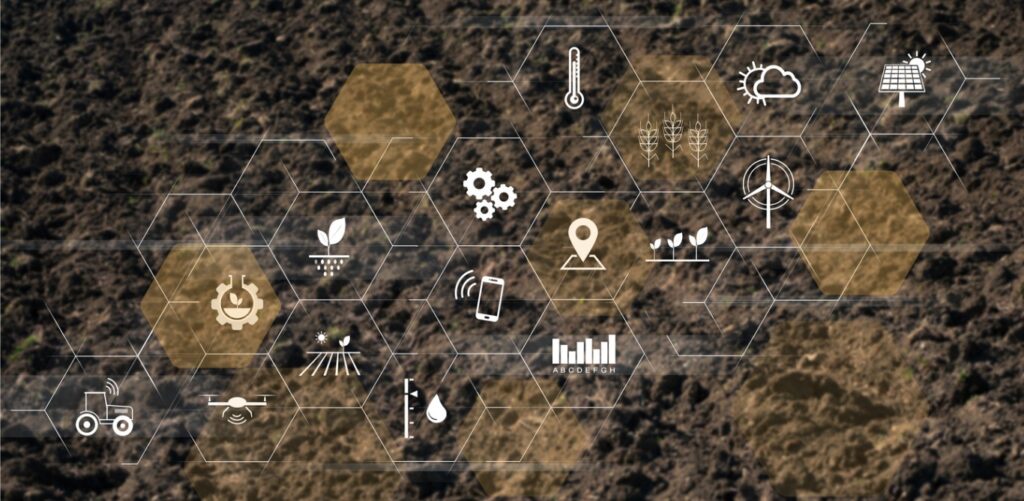
Today’s agriculture has long evolved past manual labor and traditional farming. The journey to increased efficiency and productivity has led to exponential technological growth within the agricultural ecosystem. One of the most significant changes in recent years has been the rise of precision farming, also known as precision agriculture. This data-driven approach to crop management has revolutionized how we grow and produce food, making it more sustainable, precise, and profitable. The blog explores how precision farming is changing the face of agriculture and why it is here to stay. The Dawn of a New Era in Farming: Understanding Precision Agriculture: Imagine a world where farmers can monitor the health of their crops, detect nutrient deficiencies, and even predict weather patterns with precision. Precision agriculture breathes life into this very concept, turning it into reality. Technology transforms how we grow food, ushering us into the new farming era. Precision agriculture optimizes crop production by combining cutting-edge technologies like drones, sensors, and data analytics. These technologies allow farmers to collect real-time data on soil conditions, moisture levels, and pest infestations. This information enables them to make informed decisions, improve resource allocation, and minimize waste. But precision agriculture is not just about efficiency. It also has a significant environmental impact. By using precise amounts of fertilizers, water, and pesticides, farmers can reduce their carbon footprint and protect ecosystems. The dawn of precision agriculture marks a shift towards a more sustainable and profitable future for farming. It is an exciting time to be a farmer as technology revolutionizes how we feed the world. The Digitalization of Crop Management: How Data Plays Its Part The digital age has made data an invaluable resource in modern agriculture. Precision farming has paved the way for the digitalization of crop management, harnessing data’s power to revolutionize how farmers approach their work. Farmers can now utilize advanced technologies to gather real-time crop data, including soil conditions, moisture levels, and pest infestations. This vast amounts of information allow them to make data-driven decisions, optimizing resource allocation and minimizing waste. The digitalization of crop management is not just about collecting data; it’s about using that data to drive actionable insights and improve agricultural practices. By leveraging technology and data analytics, farmers can identify patterns and trends, allowing them to make informed choices about irrigation, fertilization, and pest control. This level of precision and accuracy enhances productivity and promotes sustainability by minimizing resource usage and reducing environmental impact. In short, the digitalization of crop management is transforming agriculture by giving farmers the power of data. This data enables them to make more informed decisions, increase efficiency, and ultimately contribute to a more sustainable and profitable future for farming. Real-Life Impacts of Precision Farming on Modern Agriculture Precision farming has profoundly impacted modern agriculture, bringing numerous real-life benefits, including increased crop yield and quality. One critical impact is that farmers can optimize irrigation, fertilization, and pest control with precise monitoring and data-driven decision-making, resulting in healthier and more abundant crops. It allows for increased food production with fewer resources, helping farmers address the global challenge of feeding a growing population. Precision farming has also made agriculture more sustainable. Using sensors and data analytics, farmers can identify areas of their fields requiring less water or fertilizer, thereby minimizing waste and reducing the environmental impact. Additionally, precision agriculture allows for targeted pest management and promotes biodiversity by reducing the need for harmful pesticides. Another significant impact of precision farming is improved farm management and financial stability. By having access to real-time data on crop conditions, farmers can proactively address issues and prevent losses, thereby saving money and assuring a stable income. Precision farming is revolutionizing modern agriculture by improving crop yield, sustainability, and farm profitability. It is a game-changer that will continue to shape the future of agriculture. Future Predictions: What’s Next for Data-driven Agriculture? The future of data-driven agriculture holds even more exciting possibilities for farmers and the industry. The continuous advancement of data analytics and technology ensures precision farming will become even more precise and efficient in the coming years. Here are a few predictions for what’s next: Artificial Intelligence Integration: As AI technology evolves, we can expect to see it integrated into precision farming systems. AI algorithms can analyze large datasets, identify patterns, and make autonomous decisions, further optimizing crop management. Internet of Things (IoT) Expansion: IoT devices, such as sensors and drones, will likely expand, allowing farmers to collect even more detailed and real-time data. IoT devices will provide a more comprehensive understanding of crop conditions and enable proactive decision-making. Predictive Analytics for Climate and Pest Control: Farmers can accurately predict climate patterns and pest outbreaks by leveraging historical and real-time data. Predictive analytics enables a more proactive approach, reducing the reliance on pesticides and mitigating potential crop losses. Integration with Robotics: The integration of robotics into precision farming will continue to increase. Robots can now handle tasks such as planting, harvesting, and weed control with precision and efficiency, reducing the need for manual labor. Blockchain Implementation: Blockchain technology has the potential to revolutionize the agricultural industry by optimizing the supply chain and ensuring transparency and traceability. Blockchain can enhance consumer trust and enable farmers to get fair product prices. The future of data-driven agriculture is exceedingly promising. As technology evolves, we can expect precision farming to become even more precise, sustainable, and profitable. Farmers will have access to more advanced tools and analytics, enabling informed decision-making that will further optimize crop management and contribute to a more sustainable future. It is an exciting time to be a part of the agriculture industry as we witness the continued transformation of farming through data-driven innovation.