

How Emotion AI Enhances Field Service & Customer Experience
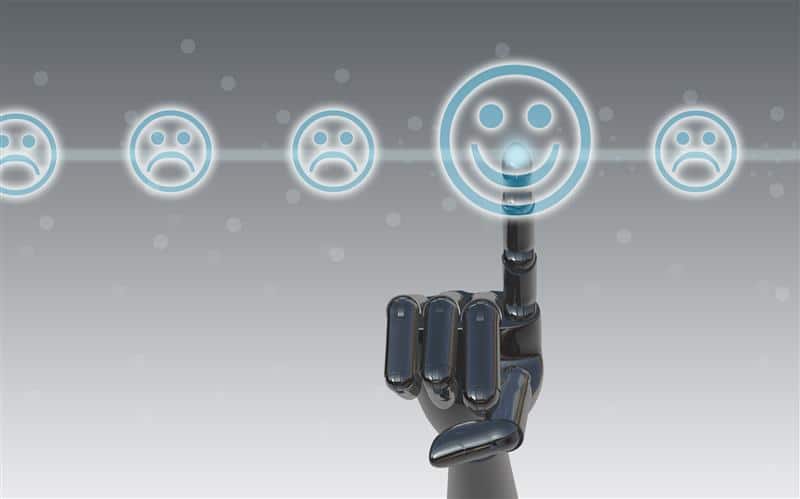
Introduction In today’s competitive landscape, meeting Service Level Agreements (SLAs) is no longer enough to ensure customer satisfaction. Customer experience has become the key differentiator in field service. HiverHQ report shows that Implementing Emotion AI in customer service has been associated with a 20% increase in customer satisfaction scores. While traditional Field Service Management (FSM) solutions focus on efficiency and SLA compliance, they often overlook the emotional aspect of service interactions. Enter Emotion AI – a transformative technology that enables service providers to understand, analyze, and act on customer emotions in real-time. By bringing this new dimension to field service, organizations can enhance customer trust, foster loyalty, and differentiate themselves in a crowded market. Emotion AI empowers service teams to move beyond reactive service models and embrace a truly customer-centric approach, strengthening long-term relationships and driving business growth. What is Emotion AI? Emotion AI, also known as Affective Computing, is a branch of artificial intelligence that enables machines to detect, interpret, and respond to human emotions. By analyzing facial expressions, voice tones, and even text sentiment, Emotion AI can gauge a customer’s emotional state in real-time. Technologies Used by Emotion AI: Natural Language Processing (NLP) – Analyzes sentiment in customer interactions. Computer Vision – Detects emotions from facial expressions. Speech Analysis – Identifies tone, pitch, and stress in voice communication. Machine Learning & Deep Learning – Predicts emotional responses and automates actions. Wearable Sensors & IoT – Tracks physiological signals like heart rate and stress levels. Emotion AI is now being integrated into field service operations to enhance customer interactions and drive satisfaction. A report by MarketsandMarkets projects that the Emotion AI market will grow from $2.74 billion in 2024 to $9.01 billion by 2030, at a CAGR of 21.9 % during 2024–2030, indicating a strong shift towards AI-driven emotional intelligence in service industries. The Need for Emotion AI in Field Service Traditional field service management (FSM) solutions primarily focus on efficiency-reducing downtime, optimizing dispatch, and ensuring compliance with SLAs. However, these metrics do not capture the emotional aspects of a customer’s experience, such as frustration due to delays or satisfaction from proactive communication. Emotion remains a key driver for delivering high levels of CX performance. A study by Forrester Research found that in 2023, elite brands delivered customer experiences that evoked, on average, 29 positive emotions-including feeling happy, valued, and appreciated – for each negative emotion. A study by Zendesk found that Two-thirds of consumers who believe a business cares about their emotional state will likely become repeat customers. Emotion AI enables service organizations to: Gauge real-time customer sentiment through voice tone, text, and facial expressions (where applicable). Prioritize high-impact cases by identifying emotionally distressed customers. Enhance service technician interactions by providing AI-driven emotional intelligence insights. Improve customer loyalty through proactive engagement and personalized service recovery actions. How Emotion AI is Transforming Field Service 1. AI-Driven Sentiment Analysis for Customer Interactions Emotion AI analyzes customer service calls, chat transcripts, and feedback forms to detect sentiment and emotional tone. This helps field service teams: Identify unhappy customers in real-time and take immediate corrective action. Automatically escalate high-priority cases to senior support staff before issues escalate. Provide personalized technician guidance to improve service engagement. According to a survey by Forrester, customer-obsessed organizations reported 41% faster revenue growth, 49% faster profit growth, and 51% better customer retention than those that are not customer-obsessed. 2. Real-Time Emotion Recognition for Field Technicians Mobile service applications integrated with AI-powered sentiment recognition tools allow field technicians to: Receive emotion-based service cues before arriving at the customer site. Adjust their approach based on customer sentiment, enhancing personalized engagement. Capture real-time customer sentiment feedback post-service for continuous improvement. A study by McKinsey found that AI-enabled customer service is now the quickest and most effective route for institutions to deliver personalized, proactive experiences that drive customer engagement 3. Predictive Customer Satisfaction Analysis Using historical service data, AI models predict potential dissatisfaction points and suggest preemptive actions. This ensures: Proactive issue resolution before it affects the customer. Reduced negative escalations, improving brand loyalty. Data-driven decision-making to refine service workflows. A report by PwC suggests that 70% of CEOs said generative AI will significantly change the way their companies create, deliver, and capture value in the next three years Benefits of Emotion AI in Field Service 1. Enhanced Customer Satisfaction By understanding and acting on customer emotions, companies can build trust and increase loyalty, leading to higher retention rates and better Net Promoter Scores (NPS). Implementing Emotion AI in customer service has been associated with a 20% increase in customer satisfaction scores 2. Proactive Service Recovery Identifying and resolving customer dissatisfaction early reduces churn and negative feedback, ensuring a more resilient brand reputation. As per SIEMENS , AI-driven predictive maintenance can reduce machine downtime costs, which amount to up to $1.5 trillion annually for global manufacturers. 3. Improved Technician Performance Technicians equipped with emotional insights can adapt their communication styles, leading to more successful service visits and better customer interactions. As mentioned in Rydoo blog, AI Agents can manage 30% of live chat communications and 80% of routine tasks, freeing up human agents to focus on complex issues. 4. Competitive Differentiation Emotion AI-driven FSM solutions allow companies to offer emotionally intelligent service experiences, increasing customer retention and brand trust. Emotion AI is reshaping the future of field service by bringing empathy, personalization, and intelligence to every customer interaction. By leveraging AI-powered solutions, service organizations can enhance customer experiences, ensuring that service excellence is not just about meeting SLAs-but about exceeding expectations and fostering long-term loyalty. The future of Emotion AI in Field Service Management (FSM) is set for significant growth, transforming customer interactions and operational efficiency. The global Emotion AI market is projected to grow from $2.74 billion in 2024 to $9.01 billion by 2030, at a CAGR of 21.9% (MarketsandMarkets). By 2032, the market is expected to reach $13.8 billion, growing at a CAGR of 22.7% (PR Newswire). These trends indicate that Emotion AI will play
Agile Testing Transformation: Rethinking How We Deliver Quality

Agile Testing Transformation is the process of moving an organization’s testing practices to an agile way of working, resulting in better quality of the delivered product. At its core, Agile Testing Transformation isn’t just a technical shift but a mindset change. It’s all about making testing faster, smarter, and more aligned with what really matters: delivering value. According to Evan Leybourn of The Agile Director, Agile focuses on three fundamental pillars: Process Agility, Technical Agility, and Business Agility. Let’s explore how these pillars are implemented in Quality Engineering. Process Agility: Adapting Testing for Continuous Improvement Process agility emphasizes creating flexibility in how teams approach testing, ensuring quality remains a priority even as plans evolve. Testing becomes a dynamic part of the development process, adapting quickly to shifting priorities and requirements. Here’s how this can be implemented in testing: Smaller, Faster Deliveries: Breaking down testing into smaller, manageable cycles helps teams validate updates incrementally instead of waiting for lengthy development phases. Early feedback from these smaller deliveries allows testers to identify and address issues sooner, leading to continuous product improvement. Frameworks That Fit Testing Needs: Agile methodologies like Scrum and SAFe provide a structure for testing that prioritizes efficiency without being overly restrictive. The focus is on delivering quality outcomes rather than adhering to rigid testing protocols. Continuous Learning in Testing: Agile encourages testers to experiment with new tools and approaches, refine their strategies, and grow through each iteration. When an approach does not work, teams adapt and apply their insights to future projects, ensuring ongoing improvement in their testing processes. Technical Agility: Building Quality That Lasts While process agility focuses on how teams work, technical agility emphasizes what they’re building. It’s about creating systems and solutions that aren’t just functional but are built to last and adapt as needs evolve. Here’s what technical agility looks like in action, especially in testing: Quality as the Foundation: Practices like Test-Driven Development (writing tests before the code) and pair programming (two minds tackling one problem) ensure quality isn’t an afterthought — it’s baked into every step of the process. Automation: The Ultimate Testing Ally: Automation transforms testing from a bottleneck to a superpower. Automated tests and deployment pipelines handle repetitive tasks, catch issues early, and free up time for more profound, more creative testing efforts. Business Agility: Making It Bigger Than Teams Agility isn’t just for developers or product teams — it’s about bringing everyone together to make quality a shared responsibility. Business agility connects the dots across departments and leadership, ensuring that testing isn’t just a task for “someone else” but something everyone contributes to. Here’s what it looks like: Testing Beyond the Testing Team: Agile isn’t just about how testers work. It’s about everyone — from finance to HR — being part of a system that makes testing smoother and more effective. With the whole organization aligned, testing becomes a collaborative effort, not a bottleneck. Enabling Leaders, Not Micromanagers: Leadership is evolving. Managers must ensure that testers and teams have the autonomy, resources, and environment necessary to excel in their work. Customer-Centric Mindset: Ultimately, testing goes beyond simply identifying bugs — it’s about guaranteeing that what we provide is effective for our customers. Why Agile Testing Transformation Matters Agile Testing Transformation changes how we approach testing to deliver faster, more intelligent, and higher-quality results. Instead of seeing testing as something that happens at the end of the process, it’s about weaving it into every stage of development. When teams adopt agile testing, they catch issues early, improve collaboration between testers and developers, and stay aligned with customer needs as they change. This shift alters conventional perspectives on testing. It’s no longer just about identifying bugs — it’s about ensuring each process stage contributes value and enhances the product. Agile Testing Transformation fosters a “quality-first” attitude, where testing continually adapts to emerging demands, integrating quality seamlessly into the whole development process. Conclusion Agile Testing Transformation is more than a methodology change; it is a paradigm shift in how we think about and approach quality in software development. By embracing agility in processes, technology, and business practices, organizations can ensure that testing becomes a proactive, value-driven activity. The transformation fosters collaboration, innovation, and adaptability, making quality an integral part of every step in the development lifecycle. Agile Testing Transformation is not just an option but a necessity for organizations aiming to thrive in a fast-paced, customer-centric world.