

Episode 8: Agentic AI for Customer Experience & Service Personalization
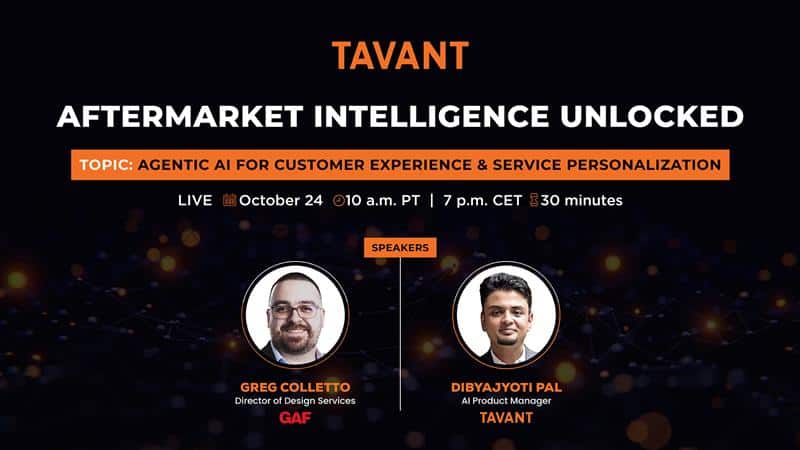
Leverage AI to support contractors and service teams, enabling personalised customer assistance at every stage of the customer journey. Speakers: Greg Colletto, Director of Design Services, GAF, Dibyajyoti Pal, AI Product Manager, Tavant When: October 24, 2025,| 10 a.m. PT / 7 p.m. CET 📅 Date Aired: September 26, 2025 ⏱️ Duration: 30 minutes
Episode 7: Agentic AI for Building Customer-Centric Communities
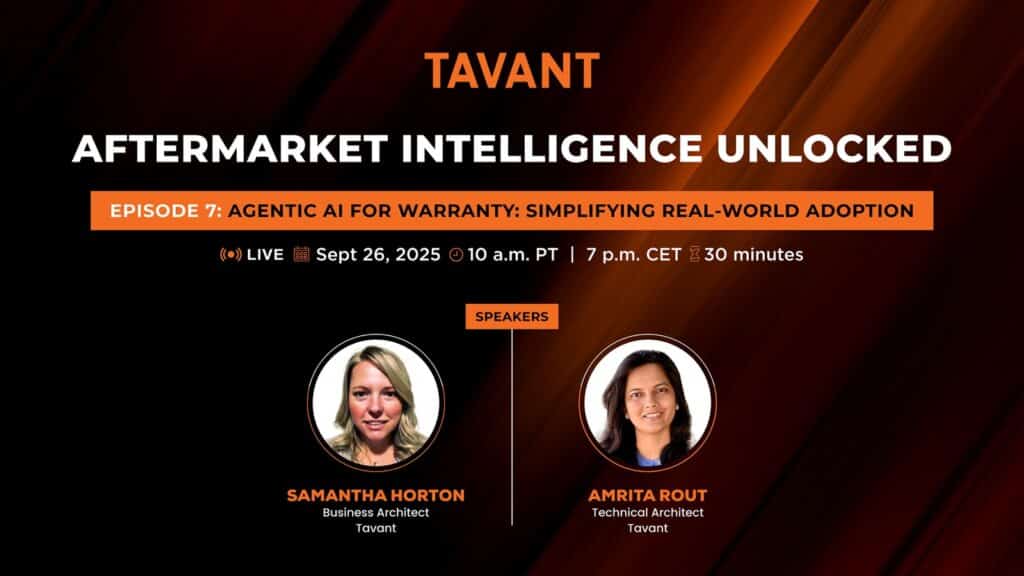
Discover how brands build passionate fan communities and leverage AI to empower service teams, and what both can learn from each other this holiday season. Speakers: Samantha Horton, Business Architect, Tavant Amrita Rout, Senior Technical Architect, Tavant When: September 26, 2025 | 10 a.m. PT / 7 p.m. CET 📅 Date Aired: September 26, 2025 ⏱️ Duration: 30 minutes
Agentic AdOps: Building the Operational Foundation for the Next Era of Media Buying

From Programmatic to Agentic: A Shift in How Media Works Over the past two decades, advertising has evolved dramatically – from handshake deals in linear TV to the automation-driven world of programmatic buying. Yet even as streaming and CTV reshaped distribution, much of premium inventory still operates through direct insertion orders and manual negotiation. Industry estimates suggest that up to 70% of premium TV transactions continue to follow these traditional workflows. Now, a new phase is emerging: agentic collaboration, where intelligent systems interpret intent, act, and optimize alongside humans. The Ad Context Protocol (AdCP) is one of the first initiatives defining this agentic future. Designed to help AI agents communicate between buyers and sellers, AdCP envisions a marketplace where campaigns are planned and executed through natural-language prompts rather than manual trafficking or endless API connections. It’s an exciting evolution, but it also raises a critical question: how ready are our operations to support it? As Ad Tech Explained noted, “Agentic AI media buying could finally close the gap between intent and execution, but only if the operational layer is ready to support it.” ¹ While standards like AdCP take shape, publishers and platforms can begin building that operational foundation today, turning fragmented AdOps into systems that learn and adapt as they work. Today’s advertisers already navigate a complex mix of direct network deals, programmatic exchanges, and CTV platform inventories – each with unique data standards and intermediaries. The result is growing operational friction that agentic systems are poised to address. Where Efficiency Hits Its Limit Most organizations have already automated parts of their AdOps workflows. The challenge is that automation alone can’t keep pace with how quickly the ecosystem changes. Every new format, data signal, or compliance update exposes the limits of static, rule-based systems. That’s why so many teams still rely on late-night QA checks and manual spreadsheet reconciliations. According to Digiday, nearly 80 percent of AdOps professionals believe their tools could do more, and most say deeper automation would directly improve profitability. ² Efficiency was the right first step. The next one is adaptability; systems that don’t just execute faster, but learn, anticipate, and adjust alongside the teams that use them. What Agentic AdOps Really Means When we talk about “agentic” operations, it’s easy to imagine a distant, fully autonomous future. In reality, agentic AdOps is already taking shape in a more grounded way. It’s about collaboration: people and intelligent systems working together in real time. Here, systems handle the complexity, automating pacing adjustments, validating creatives, and flagging anomalies, while humans focus on context and creativity. The goal isn’t to remove people from the loop but to keep them where they add the most value. This also makes agentic AdOps a bridge to what AdCP is trying to achieve. While buyer and seller agents may one day negotiate directly, those systems will still depend on operational environments that can translate intent into action. That foundation is already forming quietly but steadily inside the industry’s leading media organizations. From Vision to Execution: Agentic Systems in Practice Agentic AdOps isn’t a future concept. It’s already taking shape inside forward-thinking media organizations, where human expertise and intelligent systems operate side by side. Here’s what that looks like in practice: 1. Campaign Setup Instead of manually configuring endless line items, trafficking details, and QA checks, teams can express their intent in plain language: “Launch next week’s CTV campaign for sports audiences in North America.” The system interprets that goal, applies targeting parameters, validates creative specs, and flags anything needing review before launch. What once took hours of manual setup now unfolds in minutes, with human oversight guiding final approval. 2. Pacing & Optimization Intelligent pacing systems track results in real time, reallocating budgets automatically when certain audiences or devices underperform. If performance deviates beyond defined thresholds, the system alerts the team to review and approve adjustments. Oversight becomes sharper and more strategic, allowing humans to focus on creative and commercial priorities instead of constant monitoring. 3. Financial Reconciliation In the reconciliation phase, agentic workflows detect when ad-server data doesn’t align with billing or finance records. Discrepancies are flagged, investigated, and often resolved automatically, providing a clear audit trail. The payoff isn’t just faster closing cycles; it’s confidence that data can be trusted from start to finish. While agentic buying will transform both sides of the ecosystem, the greatest near-term opportunity lies with publishers, many of whom still rely on highly manual insertion-order processes, fragmented data entry, and inconsistent reconciliation. Efforts like this aim to simplify and empower publisher AdOps through intelligent automation that learns from every campaign. Bridging Today and Tomorrow: Readiness Before Standards The excitement around AdCP is well deserved. Still, open standards take time, and industry-wide adoption will come gradually. In the meantime, progress will depend on how effectively companies prepare their own foundations. As Streaming Media’s Nadine Krefetz noted in her coverage of the IAB’s State of Data 2025 report, “the next wave of AdTech innovation hinges on how effectively companies can connect their data and apply AI across the ad supply chain.” ³ This finding reinforces the same readiness gap agentic AdOps aims to close; ensuring that data, systems, and governance are connected enough for AI to act on intent. Agentic readiness begins now, with clean data pipelines, well-documented governance, and workflows that already respond to natural-language goals. At Tavant, readiness is enabled through a configurable agentic foundation—an accelerator designed to integrate with each publisher’s existing stack. Because every environment is different, this framework is implemented and tailored per client rather than offered as a one-size-fits-all solution. Our approach follows a phased path, starting with financial reconciliation to automate validations and error detection, then expanding into campaign setup and pacing management. Each phase compounds value, progressively embedding agentic behavior across the AdOps lifecycle. In other words, standards don’t create capability; capability makes standards possible. Those who build operational intelligence today will be ready when agent-to-agent ecosystems mature. How to Begin: Five Actions for AdOps Leaders Agentic readiness