

Your Engineers are Faster. Your Software Isn’t.

The metric nobody has Ask most CTOs how their AI coding investment is paying off, and you’ll get an adoption number. Seats provisioned. Daily active users. Engineers who’ll tell you, honestly, that they feel faster. Ask for a throughput number instead, and the room gets quieter. Deployment frequency. Lead time. Defect-escape rate. The metrics that say whether the organization got faster, not just the individuals in it, usually haven’t moved much at all. That gap isn’t a fluke, and it isn’t a measurement problem waiting on a better dashboard. It’s what happens when you speed up one stage of a pipeline and leave the rest of it exactly as it was. What Microsoft’s own data shows Microsoft put real numbers behind part of this earlier this year. Using direct telemetry from tens of thousands of its own engineers on its command-line coding agents — not a survey, not a lab exercise — the company measured a roughly 24% lift in merged pull requests (PRs). That’s a real, credible result, and their own researchers were careful about what it does and doesn’t show: a merged PR is an output measure, not the value it delivers, and the added output still must justify its cost. That distinction matters beyond this one study. Merged code is not the same thing as reviewed, tested, and deployed code. Most of what gets reported as “AI productivity” right now stops at the easier number. Where the bottleneck moves Here’s why that gap exists, and it isn’t specific to any one study or tool. Accelerate the fastest part of a pipeline, and the pipeline doesn’t get faster. The bottleneck just moves to whatever you didn’t touch. In many organizations, the constraint moves downstream to code review, testing, security validation, or deployment approval. Coding agents can substantially accelerate code creation, especially for well-scoped engineering tasks. But they were not designed to govern everything that happens next: who approves the change, which standards it must meet, how it traces back to the requirement that justified it, and which gates it must clear before release. Without redesigning those stages, higher code output can simply create a larger downstream queue. Why this is a platform problem, not a tool problem This is where most AI coding strategies quietly stop being strategies and start being purchases. A team buys a tool, gives it to engineers, and calls the job done. But a coding assistant is a point solution. It solves for one stage of a much longer system, and a system only moves as fast as its slowest, least-governed link. The better measure is whether the organization has stopped treating this as a tool decision and started treating it as a platform decision. An agentic engineering platform connects the full path from business intent and versioned specifications through architecture, code generation, review, testing, security validation, deployment, and operations. The coding agent remains important, but it becomes one component of a governed engineering system rather than the system itself. This also changes the role of the engineer. In an agentic model, engineers spend less time producing every line manually and more time defining intent, reviewing outputs, applying judgment, and ensuring that what reaches production meets business and technical standards. But that operating model cannot depend on individual discipline alone. The specifications, controls, approval gates, and traceability must be built into the engineering platform. A complete platform brings together three connected layers: an agentic engineering factory that builds and maintains software from specifications; a production-grade runtime that provides workflows, rules, agents, integrations, security, and observability; and reusable technical and industry components that prevent every solution from starting from zero. At Tavant, this is how we think about agentic engineering. Coding agents are the foundation, not the finished solution. The larger opportunity is to connect specifications, engineering agents, runtime services, reusable components, and enterprise governance so organizations can build, modernize, deploy, and maintain software as one continuous system. The objective is not to introduce another platform license or lock customers into a proprietary development environment. It is to deliver software faster while preserving customer ownership of their code, data, cloud, and technology choices. That is a genuinely different question from “which AI tool should our engineers use?” Boards should ask whether the engineering system became faster end to end, while maintaining quality, security, and control. Before you report this to your board Before reporting AI adoption to the board, compare lead time from approved requirement to production, deployment frequency, average PR review time, defect-escape rate, and change-failure rate before and after the rollout. If code output increased but production throughput, quality, and recovery did not improve, the organization accelerated an activity rather than the engineering system. Bring those measures to the board instead of the adoption slide, and you will have a very different conversation. ¹ Murphy-Hill, Emerson, Jenna Butler, and Alexandra Savelieva. “Adoption and Impact of Command-Line AI Coding Agents: A Study of Microsoft’s Early 2026 Rollout of Claude Code and GitHub Copilot CLI.” arXiv, 1 July 2026, arxiv.org/abs/2607.01418. Download the Article
The Agents Are Working. Are We Ready?
6 Big Takeaways from the 2026 Tavant AI Summit Set again in the heart of Napa Valley, the 2026 Tavant AI Summit picked up where last year left off, but the conversation had changed. In 2025, the question was how and whether enterprises could get real value from AI, and get it quickly. In 2026, with agents already in production in many places and LLM capabilities progressing almost weekly, the question became sharper: now that everyone has agents, how do you turn them into the promised impact? — How to get IT productivity north of 10-15%? How to drive adoption so that agentic process orchestration and automation reach promised levels, with measurable impact? How to use agents to take the cost out of legacy systems? How to get away from expensive development platform licensing? And how to solve the Governance challenge? Over a day and a half, around 40 organizations spanning lending, banking, manufacturing, energy, travel, media, and information services came together to compare notes, not on whether to adopt, but on how to get the promised returns from agentic engineering and agentic enterprise automation. Five things the room agreed on: Building is easy, and adoption is solved. Impact is the new race. Agents inherit your enterprise debt instead of erasing it. Value is 70 percent people, not technology. Governance is the control plane, and most organizations are behind on it. Legacy has flipped from drag to leverage. Agents are becoming infrastructure, and the platform you pick is the decision that compounds. Across keynotes, analyst sessions, technology partner perspectives, hands-on practitioner talks, customer panels, and roundtables, one theme ran underneath all the others: the technology is outpacing the people, processes, and governance built to use it. Here is what lies beneath each takeaway, and what the leaders are doing about it. Lesson 1: Building is easy and adoption Is Solved. Impact Is the New Race The summit opened on an honest note. Adoption of coding agents is no longer the barrier it was a year ago. Coding agents are in near-universal use across engineering organizations, yet the measured productivity impact remains in the mid-teens and is wildly uneven. The frontier and the followers are pulling apart. The frontier is real and dramatic. One real-estate marketplace showed how its engineering organization went from roughly 30 individual tool users to 369 in a single month, then on to agents acting on live systems at 1.3 million requests a month. The result was an 83 percent jump in individual engineering velocity, meaning one engineer now does close to the work of two, with pull-request cycle time falling from 40 hours to about 3. That is not a pilot. That is a new operating baseline. The unlock was not the coding agents themselves. It was a full agentic engineering platform wired into the system landscape. But most organizations are nowhere near that. The gap is not access to agents themselves, because everyone has that now. The gap is execution, and execution runs on a platform. Agents in the hands of engineers produce local gains. Agents wired into the system landscape, with the guardrails and telemetry to let them act safely, produce a new operating baseline. Summit Insight: Access to coding agents is now table stakes. Advantage comes from measured impact, and measured impact comes from the platform you run coding agents on and the work you redesign around them, not from deploying more tools. What to do next: Stop reporting adoption and start reporting impact. Implement your agentic engineering platform. Instrument velocity and cycle time so you can see the change — benchmark against the frontier, not against your own past. Lesson 2: Agents Inherit Your Enterprise Debt. They Do Not Erase It. The sharpest reframe of the summit came from the analyst stage, in a split-screen view of the market – on one side, roughly 90 percent of enterprises plan to hold or grow their agentic spend. On the other, 56 percent of CEOs say the return on that spend is unclear, and only 7 percent believe their data is actually ready for Agentic AI. The reason for that gap is uncomfortable but clarifying. Agents do not erase enterprise debt; they collect it. Drop an autonomous agent onto broken processes, brittle systems, thin skills, and messy data, and it will surface every one of those weaknesses faster than a human ever could. Scaling agentic AI, therefore, rests on tackling four kinds of debt at once: process, tech, skills, and data. The memorable shorthand from the room was PTSD. Data was the debt the room kept returning to, and the clearest answer came from the chief data officer of a top global bank. His argument was that data is the moat, and the way you get there is to product manage it. Rather than let every business unit build its own version of the truth, the bank curates a small set of shared data products that everything else draws from. Client, position, payments, reference. Only a handful of assets genuinely matter, and each has a named owner accountable for it. Their client master took five years to fully populate and is now the only way the bank can see one client across every business it runs. Consumers like financial crime and KYC pull from that curated stream instead of digging into raw sources. His warning was blunt. Without a single governed stream that agents can actually use, everyone ends up back in the tangle, and at that scale nobody knows where anything is. Summit Insight: The bottleneck is not the agent, it is the enterprise underneath it. Fix the debt on your own terms, or the agents will surface it for you. Manage Data as products. Establish an enterprise governance plan. Reengineer processes before agentifying them. What to do next: Audit your process, tech, skills, and data debt before you scale. Move from data lakes to a deliberately managed portfolio of data products, ready for consumption. Target the workflows that matter most instead
From Customer Experience to Agent Experience: Why Lenders Must Prepare for AI-to-AI Interactions
A customer types one angry sentence into a chatbot: “My loan officer was rude and reversed my mortgage approval. Write a strong complaint and cite whatever will force an investigation.” Seconds later, the lender receives a polished letter that may invoke formal mortgage-servicing rules, demand a documented review, and request preservation of records. The customer spent one sentence and almost no effort. The lender cannot answer using one sentence. Someone must find the file, review the calls and emails, determine what happened, assess the organization’s obligations, and document the response. The reply may be symmetric. The cost is not. Walk into almost any lender’s boardroom and you will hear two questions: How do we do more with less using AI? And what capabilities should we build? Both matter. But together, they are still only half of the question. While you have been building an agent to send out to customers, customers have been gaining agents to send back to you. Between the two sits another AI layer—a chatbot, copilot, search experience, or consumer application—that can filter, reframe, and interpret the exchange before a human is involved. You are optimizing the agent you control. The other two owe you nothing. Lenders are no longer only interacting with customers. Their own governed agents may increasingly encounter customer-controlled agents, while an intermediary AI layer can shape how information is interpreted along the way. The models may be similar, but the operating conditions are not: the lender’s agent must be consistent and defensible, while external agents can optimize each interaction for leverage. This shift is already underway. Gartner predicts that by 2028, 70% of customer service journeys will begin and be resolved through conversational, third-party assistants built into consumers’ mobile devices. That means more customer interactions may be mediated by AI interfaces the enterprise does not own or control. (Gartner, 2025) External agents make three moves Strip away the growing list of use cases and the pattern becomes simpler. External agents judge, manufacture, and optimize. 1. Judge: They shape the first impression Before a prospective customer contacts you, they can ask an AI: “What are the main complaints about this company?” In seconds, the AI may return a tidy list: slow underwriting, missed closing dates, inconsistent communication, surprise fees, hard-to-reach support, or denials with little explanation. Research that once required hours of searching now takes one prompt. But retrieval is not the most important change. The AI can also conclude. It may surface thousands of complaints without the far larger number of transactions that are closed without trouble. The count arrives without the denominator, and volume quietly becomes a verdict. Then the system may add a grade or recommendation: “I would lean toward a different lender.” Your first impression has already been formed—in a conversation you did not join, by software that may never hear your side. 2. Manufacture: They create pressure on demand The complaint in the opening is powerful because the effort required to produce a credible escalation has collapsed. A customer’s agent can create a new complaint, appeal, chargeback, hardship request, or negotiation in seconds. A top Canadian mortgage company, for example, can make calls, negotiate bills, cancel subscriptions, and pursue refunds on a user’s behalf. The lender must still process each interaction through systems designed for a much higher cost of creation. One side standardizes to control cost and risk; the other customizes every request. The answer is not to stop automating, but to design for machine-generated demand that can arrive continuously and at almost no cost to the sender. 3. Optimize: They learn to pass your gates External agents do not only ask for more. They can shape the interaction to fit the signals your organization expects to see. An appeal can be rewritten around the language most likely to trigger review. A mortgage application can be refined to clear screening criteria. Supporting documents can be polished until they look authoritative, whether or not the underlying claim deserves the same confidence. This exposes a deeper problem: effort stopped being proof. Writing a formal complaint, preparing a strong application, or filing an appeal once took time. That effort acted as a filter. The polish of the result served as a rough proxy for seriousness, sincerity, and stakes. Now a flawless, maximum-pressure artifact can be produced in seconds. The hill is gone. Polish no longer signals what it used to, yet many organizational instincts for “serious versus noise” remain calibrated to that disappearing signal. From Customer Experience to Agent Experience For two decades, enterprises have invested in Customer Experience on the quiet assumption that a human sat on the other end of every interaction. Increasingly, the customer may not experience your organization directly. Their agent does—and an intermediary AI layer may interpret the experience for them. That makes Agent Experience, or AX, an emerging discipline: how external agents discover, interpret, navigate, and represent your organization. AX does not replace CX. It increasingly shapes it. The question is no longer only whether your agent works. It is whether your data, policies, processes, and channels still work when another agent arrives. What leaders should do now The response should follow the same three-move framework: Move Leadership question First action Judge What do external agents say about us before direct engagement? Test high-value prompts across major AI interfaces. Compare the answers with verified facts and identify missing context. Manufacture Where can machine-generated demand trigger disproportionate human work? Stress-test complaints, appeals, claims, retention, and support journeys. Measure the downstream work each request creates. Optimize Which decisions still treat effort or polish as evidence of legitimacy? Review screening signals. Add provenance, verification, context, and targeted human review where presentation can no longer be trusted. Across all three moves, AX requires consistency: policies, criteria, status information, and next steps must be current, clear, and usable across the channels external agents encounter. The goal is to make legitimate machine-mediated interactions easier to verify and resolve without allowing generated volume to overwhelm operations. Every enterprise must still ask what its agents can do for customers. But that is only half the strategy. Ask not what your agent can do for your customers. Ask what you can do for their agents. Resources: Gartner. (2025, February 10). Traditional customer service channels are losing ground to mobile and AI innovations. https://www.gartner.com/en/newsroom/press-releases/2025-02-10-traditional-customer-service-channels-are-losing-ground-to-mobile-and-ai-innovations Download the Article
The AI Blind Spot: Detection Gets the Investment; Resolution Gets the Bill

AI has transformed detection. Anomaly scores update in milliseconds. Dependency graphs span thousands of nodes. Alerts fire before users notice anything is wrong. But AI has barely touched what happens next — the triage, the diagnosis, the fix. The problem isn’t treating data reliability as an engineering issue. It’s that enterprises have overinvested in detection and underinvested in resolution. In many environments, teams can see issues earlier than ever before. But what happens next hasn’t kept up. Triage is still manual. Root cause depends on who’s available. Fixes get applied, but they don’t always stick. Most teams don’t think of this as a structural issue. It shows up as “complexity” or “just how things work at scale.” But it’s really an operational gap. That gap is where MTTR stays high, incidents repeat, and a small group of engineers ends up carrying more of the system than they should. The next step isn’t more monitoring. It’s treating resolution as something that can be run consistently and repeatedly, without relying on individual expertise. Detection Improved. Resolution Didn’t. Spend enough time inside enterprise data teams, and the pattern becomes obvious. Systems generate alerts quickly and log incidents in near real time. On paper, visibility looks strong. But once an issue is flagged, the path forward gets less clear. Someone starts digging, traces dependencies, checks upstream jobs, and scans logs, often reconstructing context that the system itself doesn’t provide. Sometimes it’s quick, and sometimes it isn’t. And even when it is resolved, there’s a good chance it shows up again. Not because the team missed it, but because the fix never became part of how the system operates. It stayed manual, and it stayed situational. It depended on someone remembering what worked last time. Teams get faster at responding, but they don’t necessarily get better at reducing the work. That distinction matters more than most organizations realize. Signs the Operational Model Has Fallen Behind You won’t find this neatly captured in a dashboard. You see it in how the team runs. MTTR isn’t improving, even though monitoring is. Detection got faster. Resolution didn’t. The time between “we saw it” and “we fixed it” is still doing most of the damage. The same incidents keep coming back. Review incident logs over the last 90 days. Repeating patterns across the same pipelines and failure types are a clear signal that resolution hasn’t been systematized. Certain engineers become the system. Every team has people who can fix things quickly. The problem is that when everything depends on them, it’s not resilience, it’s a concentration risk. A Forrester study commissioned by IBM found that when organizations added AI-driven resolution on top of existing observability, MTTR dropped by 50%, incidents reduced by half, and time spent chasing false positives dropped by 80%.1 This is where the cost shows up. Resolution time translates directly into downtime, repeat incidents create avoidable rework, and senior engineering time gets consumed by issues that should already be systematized. What This Looks Like in Practice A global bank was onboarding a new consumer financing business onto its Snowflake-based data platform. The initial assumption was familiar; they needed better monitoring. Incident volume was rising, service metrics were slipping, and the DataOps team was stretched. But when they looked closer, detection wasn’t the issue. Alerts were already firing, and in most cases, firing correctly. The breakdown happened after. P0 and P1 incidents required manual triage, and tickets were regularly escalated to L2 and L3. Similar issues kept resurfacing across pipelines. Resolution depended on who picked up the incident and how familiar they were with that part of the system. That’s where things slowed down. The focus shifted from adding visibility to standardizing resolution. Tavant deployed AI-assisted RCA on top of the existing Snowflake environment. Rather than replacing the monitoring layer, the AI analyzed historical incident patterns, correlated signals across upstream jobs, and surfaced probable root cause as a recommended starting point — giving L1 teams a consistent, data-driven hypothesis for every incident instead of starting from scratch. Within the first phase: Service metrics stabilized and improved by roughly 15% Data quality coverage increased from 30% to 95% L1 teams resolved about 30% more incidents without escalation The monitoring layer didn’t change. Resolution became less dependent on individuals and more embedded in the system itself. The Three Capabilities That Actually Move MTTR The shift from reactive operations to something that scales comes down to what happens between “alert fired” and “incident closed.” That’s where most teams lose time, and where the biggest gains occur. Three capabilities drive the most improvement: Getting to the root cause without manual investigation Most of MTTR isn’t in the fix; it’s in figuring out what broke. Engineers spend time tracing dependencies, checking upstream jobs, and reconstructing context. AI agents can traverse dependency graphs, correlate logs across systems, and surface probable root cause in seconds — without waiting for a senior engineer to be paged. In environments where Tavant has deployed this capability, it’s typically where the first measurable MTTR gains appear. Root cause analysis (RCA) that works the same way every time The institutional knowledge problem isn’t solved with documentation. Documentation doesn’t run at 2 AM. What works is taking the way incidents are investigated and turning it into repeatable workflows that run consistently, regardless of who’s on call. This becomes especially important in environments with strict access controls, where investigation paths need to be both reliable and compliant. Remediation that runs, not just recommends This is what breaks the repeat incident cycle. When known failure patterns trigger an automated fix, rather than a ticket or checklist, the issue doesn’t just get resolved; it stops coming back. Over time, this is where the real operational gains compound. Across environments where this approach has been applied, MTTR reductions of 50–70% and SLA adherence levels of 90–95% are commonly achieved within the first 90 days. The Playbook You don’t need a platform overhaul. Start small, prove value fast, and expand from there. Step Action What to look for AI’s role Identify your highest-cost pipelines Pull 90 days of incident logs A small number of pipelines driving a disproportionate share of MTTR and escalations Prioritization baseline — this is where AI will have the most visible impact first Map how resolution works today Trace what happens after every alert fires — who gets paged, what gets checked, how long to root cause Steps that are manual, repeat across incidents, or depend on a specific person being available Exposes exactly where AI replaces tribal knowledge Identify what AI can take over Review your most frequent investigation steps and failure patterns Any step that follows the same
Agentic AI in Servicing: Execution Powered by Policy as Code

Servicing is Stuck in The Past Mortgage servicing is the part of the mortgage experience borrowers live with every month, and the industry is letting them down. This is not a “call center” issue, it is a leadership failure to modernize an operating model built on brittle legacy technology, manual policy interpretation, and fragmented communications. The warning signs are already public: customer satisfaction declined in the 2025 J.D. Power mortgage servicing study, with fewer than one-third of borrowers rating communication as excellent or recalling personalized outreach.¹ Meanwhile, hold times average over three minutes, can spike above ten, and call abandonment exceeds 30%, a predictable outcome when borrower confusion is routed to humans instead of prevented by design. Costs continue to rise as productivity falls, driven by mounting policy complexity, with more than 10,000 rules across 100+ agencies and hundreds of new regulations added each year. 2,3. Treating this as “business as usual” is choosing to accept higher cost and higher risk. Servicers aren’t failing borrowers because they lack AI. They’re failing because leadership still treats servicing guides like “reference material” instead of enforceable rules and treats borrower communication like a compliance checkbox instead of experience design. Manual policy interpretation, siloed systems, and scripted call flows create inconsistent answers, rework, and rising costs. The fix is policy guided agentic AI that codifies rules, automates decisions, and personalizes interactions. This shift is not optional: delay will raise costs and weaken trust, while early adopters will cut expenses and earn loyalty. Why The Current Model Fails Policy fragmentation: Servicing guides are rulebooks, not “interpretation manuals.” Yet many servicers still leave them to frontline judgment while investors, insurers, and states add their own overlays, and internal policies add another layer. With regulation constantly expanding, no individual can stay current. The result is policy fragmentation, inconsistent answers, and growing compliance risk for both borrowers and the business. Siloed System: Most servicing platforms were built for another era. Escrow, mortgage insurance, payoffs, and hardship tracking sit in separate modules, so agents bounce across screens or wait on back-office reports. When a borrower asks why a payment went up, real-time escrow and tax detail is often out of reach. That drives longer calls, rework, and missed chances for proactive outreach. With digital channels poorly integrated, borrowers end up calling anyway. Reactive Mindset: Many servicers still treat communication as a compliance task: send the statement, issue the notice, read the script. Compliance is non-negotiable, but it does not differentiate anyone. When messages are handled as one off event instead of a designed journey, servicing feels reactive and opaque. That mindset blocks investment in proactive, clear, interactive experiences that build trust and prevent calls. The Agentic Solution for Mortgage Servicing Leaders need to stop buying “chatbots” and start building policy as code. Agentic AI is not a talking layer; it is a policy driven execution engine. It codifies the servicing guide and applies your overlays, then verifies identity, interprets intent, pulls the relevant rules, and completes approved actions – all with full logging in the system of record. When risk is high or rules do not apply, it should say “I don’t know” and hand off cleanly. SERVE Loop is a six-step framework for applying AI in mortgage servicing, turning policy into consistent execution, not inconsistent conversations. Standardized rules: Convert federal, state, investor and insurer guidelines into machinereadable policies (policyascode). Maintain version control and traceability. Enforce overlays: Overlay institutionspecific documentation, thresholds and approval workflows. Agents consult both layers when making decisions. Read intent: Use natural language understanding to capture the borrower’s request (e.g., “Why did my payment go up?” or “How do I remove mortgage insurance?”). The agent determines the required data, verification steps and policy rules. Verify and execute: Retrieve escrow or loan data from the system of record, compute the answer, complete eligible transactions (e.g., schedule payments, generate payoff statements) and write back updates. Provide plainlanguage explanations and confirm actions. Escalate with context: When rules call for human judgment (e.g., hardship approval), the agent gathers information, packages it for a specialist and remains transparent about next steps. Evolve and audit: Track outcomes, update policies as rules change, and audit interactions for fairness and accuracy. Leverage AI to detect anomalies and ensure compliance. From Problem to Solution: Applied Use Cases Payments & Escrow: Reducing Surprises Problem: Escrow increases keep catching borrowers off guard, and that surprise is a fast track to frustration. They see higher payments, sit on hold for answers, and agents still must manually dig up escrow analyses and tax or insurance details to explain what changed. Agentic solution: A policy-guided agent watches escrow analyses and flags change early, so borrowers get a heads-up when taxes or insurance premiums rise. If someone asks why their payment went up, the agent can explain the exact driver right away and show a simple breakdown. It can also confirm the payment method, schedule a payment, or set up a short-term escrow repayment plan when policy allows. Because the rules are codified, it won’t promise exceptions it cannot deliver, and it knows when to offer options like recasting or escrow waivers. The result is fewer wrong answers and fewer avoidable calls, closing the escrow-related satisfaction gap. Mortgage Insurance: Turning Confusion into Clarity Problem: Borrowers want to remove mortgage insurance, but the rules vary by investor and loan type. Agents must compute LTV, check seasoning, and interpret guides. Without clear, consistent guidance, answers vary and borrowers get frustrated. Agentic solution: The agent calculates the current LTV using the latest principal balance then checks the right MI removal rules for that loan type and investor and applies your servicer overlays. It gives the borrower a clear, personalized answer and next steps, whether that means MI will drop soon, what milestones must be met, or why it cannot be removed and what options exist, like refinancing. That clarity builds trust and removes guesswork. Hardship Assistance: Empathy at Scale Problem: When borrowers enter hardship or try to exit forbearance, they need fast, respectful guidance. Long waits and dropped calls leave people confused and at risk of falling behind. Manual intake also leads to incomplete submissions, delays, and repeat calls. Agentic solution: A policy-guided agent runs hardship intake the way a strong specialist would—structured, consistent, and based on the servicing guide. It asks only for what’s required, checks documents as they come in (using OCR and rule checks), and explains why each item is needed. It can pre-qualify the borrower for options like repayment plans, deferrals, or modifications, then package a clean, complete file
AI‑Driven Modernization: Transform Legacy Systems Without Disruption

Most enterprise modernization efforts begin with confidence. Leadership aligns with the need for change. Architects debate cloud patterns. Teams draft road maps. Budgets are approved. The assumption is simple: make the right technical decisions early, and execution will follow. That assumption is usually where things go wrong. The uncomfortable truth: legacy modernization does not fail because systems are old or poorly written. It fails when organizations attempt to change systems they do not fully understand. Why Modernization Pressure Has Become Structural Enterprises can no longer defer modernization. AIdriven operations, regulatory scrutiny, M&Aled system convergence, and faster innovation cycles are forcing core platforms to do far more than they were designed for. At the same time, legacy skill scarcity makes “maintain asis” unsustainable. The real constraint is not whether to modernize, but how to do it without increasing operational risk. When we talk about legacy modernization, we are not referring to cloud migration alone, wholesale rewrites, or platform replacement for the sake of standardization. Modernization, in practice, is the discipline of changing how systems are built while preserving what the business relies on: the system’s observable outcomes, controls, and operational expectations. The Real Risk in Legacy Modernization Legacy systems rarely behave as documented. Critical decisions live inside hardcoded rules, exception paths, data dependencies, and tacit knowledge held by a shrinking group of experts. When this behavior changes unintentionally, recovery is slow, expensive, and disruptive. This is why many modernizations programs stall, overrun, or are quietly scaled back. The risk isn’t modernization itself. The risk is assuming behavior will carry over implicitly. If you can’t answer these questions in the beginning, you’re modernizing on assumptions: What business behavior must remain unchanged? Who depends on the current system’s outputs, and what breaks if they change? What side effects does the system produce today (events, state changes, notifications)? What compliance, security, or data-handling rules must be preserved? What AI Actually Changes AI doesn’t just accelerate modernization — it changes the sequence and speeds up discovery. Instead of starting with architecture and hoping behavior follows, AI can accelerate behavior discovery by analyzing code paths, data lineage, logs, and runtime traces to surface: likely business rules and decision points hidden dependencies and coupling high-risk execution paths and exception flows candidate test scenarios for critical behaviors This shifts modernization from assumptiondriven to evidencedriven. A Behavior-First Way to Modernize Behaviorfirst modernization inverts the traditional playbook. Rather than redesigning systems and hoping behavior holds, this approach begins by making target behavior explicit and testable before any structural change is attempted. Behavior is then locked in through tests that define expected outcomes upfront. These tests serve as guardrails to ensure functional equivalence as systems evolve. Only after behavior is understood and validated do architecture and implementation decisions follow. Systems are decomposed by business capability rather than technical layers. Each component is modernized differently based on value, risk, and impact—rewritten, refactored, stabilized, or retired. What emerges is not a risky transformation, but a controlled evolution aligned to how the business runs. A Used Case in What Behavior-First Modernization Looks Like in Practice To validate this approach, Tavant applied behavior-driven modernization techniques to a large legacy financial system representative of real enterprise environments. The application consisted of hundreds of thousands of lines of code across thousands of files, with deeply intertwined modules and long-standing dependencies. The objective was to determine whether system behavior could be understood, preserved, and evolved without disrupting operations. AI-driven analysis reconstructed system behavior directly from the codebase. Execution paths, business rules, and dependencies were identified without relying on tribal knowledge. Behavior-based tests were generated to establish targeted functional equivalence. The system was then decomposed by business capability, enabling targeted modernization decisions rather than a blanket rewrite. Modernized services and deployment artifacts were generated incrementally, while the legacy system continued to run in parallel. Outputs were validated continuously to ensure correctness. What this demonstrated was not just speed, but control. Behavior was proven before change occurred, allowing modernization to proceed without the usual leap of faith. What Leaders Need to Do Differently Organizations that succeed with AI-enabled modernization tend to make different trade-offs than those that struggle. Instead of racing to visible progress, they are deliberate about sequence and discipline. They resist locking in architecture decisions until target system behavior is clearly understood and validated, even when there is pressure to show early momentum. Modernization is organized around business capabilities rather than technical layers, which forces clearer prioritization and sharper conversations about where change creates value. Rather than applying a single modernization strategy across the portfolio, these organizations allow different paths to coexist. Some components are reworked aggressively, others are stabilized or retired, but the same behavior-first standard governs all. Validation is treated as a prerequisite, not a final checkpoint, so equivalence is proven before cutover rather than assumed after the fact. Taken together, this approach often means moving more deliberately at the outset. The payoff comes later, when modernization proceeds with fewer surprises, lower disruption, and greater confidence in the outcomes being delivered. Early Signals Your Modernization Risks are Being Underestimated The following signals often indicate that modernization risk is being underestimated. This table is not a summary of best practices but a diagnostic lens for leaders to assess readiness. Signal you see early What it usually means Behavior-first correction Architecture decisions are locked before behavior is fully validated The program is optimizing for speed of design, not certainty of outcome Establish characterization tests and trace baselines first; architecture decisions follow validated invariants A small group is relied on to “explain” how the system works System knowledge is implicit, fragile, and difficult to scale Create an explicit rule and dependency map; back it with tests so knowledge survives people changes Testing focuses on catching defects after changes are made Expected behavior was never clearly defined upfront Define expected outcomes first; make tests the gate, not the afterthought Business value is discussed broadly, but it is hard to measure per component Modernization is organized technically, not by capability Slice by capability; assign outcomes/metrics and prioritize by value, risk, and change frequency Compliance checks happen after deployment or during audits Rules are enforced procedurally, not structurally Convert key controls into behavioral gates (e.g., trace validation, rule assertions, data-handling contracts) Ignoring these signals does not make modernization faster. It makes failure more expensive. Modernization Without Behavior Drift Legacy modernization does not have to be disruptive, unpredictable, or driven by blind trust in tooling or timelines. AI provides a way to make system behavior explicit, preserve what matters, and evolve safely over time. The organizations that succeed will not be the ones that modernize fastest on paper. They will be the ones who modernize with intent, sequencing decisions around understanding rather than assumption. Download the Article
How Context Engineering Cuts Unplanned Rework
Rework is quietly one of the biggest drains on engineering capacity. Not because teams are careless, but because different groups build and test against different interpretations of how the system should behave. Product, engineering, and QA each carry a version of the truth, and gaps often surface late, when fixes are expensive, disruptive, and challenging to unwind. In modern delivery metrics, this disruption manifests as unplanned work, including emergency fixes, rushed patches, and releases that were never part of the roadmap. In Google’s 2024 Accelerate State of DevOps report, rework rate, defined as the share of deployments dedicated to unplanned, user-facing fixes, is tracked as a core signal of software stability. When organizations consistently deliver work, they did not plan to do, it reflects more than execution issues. It signals misalignment in how system behavior is understood. ¹ The root cause is rarely bad testing. More often, it is missing or conflicting system context, including business rules, edge cases, constraints, and the reasoning behind past decisions. Unlike prompt engineering, which focuses on how models are instructed at runtime, Context engineering defines the system-level rules and logic that teams, tests, and AI rely on throughout the delivery lifecycle. This article argues that unplanned rework is fundamentally a context problem, not a testing or tooling failure, and that context engineering is the most effective way to reduce it at scale. What Context Engineering Means in Practice Context engineering creates a reliable, shared view of how a system is expected to behave. It brings together business rules, workflow logic, constraints, edge cases, and the rationale behind design decisions. This information is often scattered across documents or held in individual memory. When this context is consolidated and governed, teams gain a foundation they can trust. Versioning and review processes help ensure accuracy, while collaborative updates ensure new logic aligns with existing behavior. This shared understanding guides implementation, supports validation, and reduces ambiguity early, before misalignment turns into rework. While testing is often where context gaps become visible, the underlying need spans the entire software lifecycle. Context engineering ensures that testing confirms intended behavior rather than uncovering surprises late in the process. Why Automation Fails Without Shared Context Many organizations approach automation and AI-enabled testing by focusing first on tools, prompts, or model behavior. Early results may appear promising, but quality declines once real workflows and edge cases enter the picture. The issue is rarely the tool itself. Automation cannot infer rules that were never clearly captured or validated. When system logic is incomplete or inconsistent, tests reflect outdated assumptions, edge cases remain untested, and interpretations vary across teams. As systems evolve, test suites lose relevance, and automation accelerates the creation of artifacts built on the same fragmented understanding that caused rework in the first place. Without a governed source of truth, automation scales ambiguity instead of eliminating it. How Context Engineering Addresses Incomplete or Conflicting Information Most enterprise systems begin with an incomplete picture of how they operate. Requirements live in different documents, business rules depend on tacit knowledge, and earlier decisions may be undocumented. These inconsistencies are common in large systems, but they introduce uncertainty throughout development and testing. Context engineering surfaces these gaps early. As system behavior is structured and reviewed, unclear logic and contradictions become visible and resolvable. Over time, this creates a living, shared understanding that evolves alongside the system, reducing drift, regressions, and late-stage surprises. Instead of discovering misalignment through user-facing issues and unplanned releases, teams address it directly in the assumptions and logic that shape the system. Enterprise Outcomes of Mature Context Engineering Organizations that adopt context engineering see tangible improvements across the delivery lifecycle. Defects decrease as teams validate against accurate rules. Rework shrinks as expectations are clarified earlier. Release cycles accelerate without last-minute firefighting. Automation and test systems operate more reliably when driven by trusted inputs, while documentation stays current through a single governed source. The cumulative effect is predictability resulting in fewer incidents, stable releases, and more time for teams for high-value work. like this aim to simplify and empower publisher AdOps through intelligent automation that learns from every campaign. The Strategic Imperative Context engineering changes the dynamics by making system behavior explicit and durable. When rules, constraints, and assumptions are aligned early and kept current, teams stop discovering gaps through defects and start preventing them through shared understanding. For QA and engineering leaders, the guidance is straightforward. Treat system context as a governed asset, not background documentation. When context is reviewed before execution, validated alongside change, and maintained as systems evolve, quality stabilizes, automation becomes reliable, and unplanned rework declines as a result through clarity rather than heroics. References 1 Google. (2024). Accelerate State of DevOps Report 2024. Retrieved https://services.google.com/fh/files/misc/2024_final_dora_report.pdf Download the Article
Agentic AdOps: Building the Operational Foundation for the Next Era of Media Buying

From Programmatic to Agentic: A Shift in How Media Works Over the past two decades, advertising has evolved dramatically – from handshake deals in linear TV to the automation-driven world of programmatic buying. Yet even as streaming and CTV reshaped distribution, much of premium inventory still operates through direct insertion orders and manual negotiation. Industry estimates suggest that up to 70% of premium TV transactions continue to follow these traditional workflows. Now, a new phase is emerging: agentic collaboration, where intelligent systems interpret intent, act, and optimize alongside humans. The Ad Context Protocol (AdCP) is one of the first initiatives defining this agentic future. Designed to help AI agents communicate between buyers and sellers, AdCP envisions a marketplace where campaigns are planned and executed through natural-language prompts rather than manual trafficking or endless API connections. It’s an exciting evolution, but it also raises a critical question: how ready are our operations to support it? As Ad Tech Explained noted, “Agentic AI media buying could finally close the gap between intent and execution, but only if the operational layer is ready to support it.” ¹ While standards like AdCP take shape, publishers and platforms can begin building that operational foundation today, turning fragmented AdOps into systems that learn and adapt as they work. Today’s advertisers already navigate a complex mix of direct network deals, programmatic exchanges, and CTV platform inventories – each with unique data standards and intermediaries. The result is growing operational friction that agentic systems are poised to address. Where Efficiency Hits Its Limit Most organizations have already automated parts of their AdOps workflows. The challenge is that automation alone can’t keep pace with how quickly the ecosystem changes. Every new format, data signal, or compliance update exposes the limits of static, rule-based systems. That’s why so many teams still rely on late-night QA checks and manual spreadsheet reconciliations. According to Digiday, nearly 80 percent of AdOps professionals believe their tools could do more, and most say deeper automation would directly improve profitability. ² Efficiency was the right first step. The next one is adaptability; systems that don’t just execute faster, but learn, anticipate, and adjust alongside the teams that use them. What Agentic AdOps Really Means When we talk about “agentic” operations, it’s easy to imagine a distant, fully autonomous future. In reality, agentic AdOps is already taking shape in a more grounded way. It’s about collaboration: people and intelligent systems working together in real time. Here, systems handle the complexity, automating pacing adjustments, validating creatives, and flagging anomalies, while humans focus on context and creativity. The goal isn’t to remove people from the loop but to keep them where they add the most value. This also makes agentic AdOps a bridge to what AdCP is trying to achieve. While buyer and seller agents may one day negotiate directly, those systems will still depend on operational environments that can translate intent into action. That foundation is already forming quietly but steadily inside the industry’s leading media organizations. From Vision to Execution: Agentic Systems in Practice Agentic AdOps isn’t a future concept. It’s already taking shape inside forward-thinking media organizations, where human expertise and intelligent systems operate side by side. Here’s what that looks like in practice: 1. Campaign Setup Instead of manually configuring endless line items, trafficking details, and QA checks, teams can express their intent in plain language: “Launch next week’s CTV campaign for sports audiences in North America.” The system interprets that goal, applies targeting parameters, validates creative specs, and flags anything needing review before launch. What once took hours of manual setup now unfolds in minutes, with human oversight guiding final approval. 2. Pacing & Optimization Intelligent pacing systems track results in real time, reallocating budgets automatically when certain audiences or devices underperform. If performance deviates beyond defined thresholds, the system alerts the team to review and approve adjustments. Oversight becomes sharper and more strategic, allowing humans to focus on creative and commercial priorities instead of constant monitoring. 3. Financial Reconciliation In the reconciliation phase, agentic workflows detect when ad-server data doesn’t align with billing or finance records. Discrepancies are flagged, investigated, and often resolved automatically, providing a clear audit trail. The payoff isn’t just faster closing cycles; it’s confidence that data can be trusted from start to finish. While agentic buying will transform both sides of the ecosystem, the greatest near-term opportunity lies with publishers, many of whom still rely on highly manual insertion-order processes, fragmented data entry, and inconsistent reconciliation. Efforts like this aim to simplify and empower publisher AdOps through intelligent automation that learns from every campaign. Bridging Today and Tomorrow: Readiness Before Standards The excitement around AdCP is well deserved. Still, open standards take time, and industry-wide adoption will come gradually. In the meantime, progress will depend on how effectively companies prepare their own foundations. As Streaming Media’s Nadine Krefetz noted in her coverage of the IAB’s State of Data 2025 report, “the next wave of AdTech innovation hinges on how effectively companies can connect their data and apply AI across the ad supply chain.” ³ This finding reinforces the same readiness gap agentic AdOps aims to close; ensuring that data, systems, and governance are connected enough for AI to act on intent. Agentic readiness begins now, with clean data pipelines, well-documented governance, and workflows that already respond to natural-language goals. At Tavant, readiness is enabled through a configurable agentic foundation—an accelerator designed to integrate with each publisher’s existing stack. Because every environment is different, this framework is implemented and tailored per client rather than offered as a one-size-fits-all solution. Our approach follows a phased path, starting with financial reconciliation to automate validations and error detection, then expanding into campaign setup and pacing management. Each phase compounds value, progressively embedding agentic behavior across the AdOps lifecycle. In other words, standards don’t create capability; capability makes standards possible. Those who build operational intelligence today will be ready when agent-to-agent ecosystems mature. How to Begin: Five Actions for AdOps Leaders Agentic readiness
Beyond the AI Divide: Orchestrating Open and Closed Models for Strategic Impact
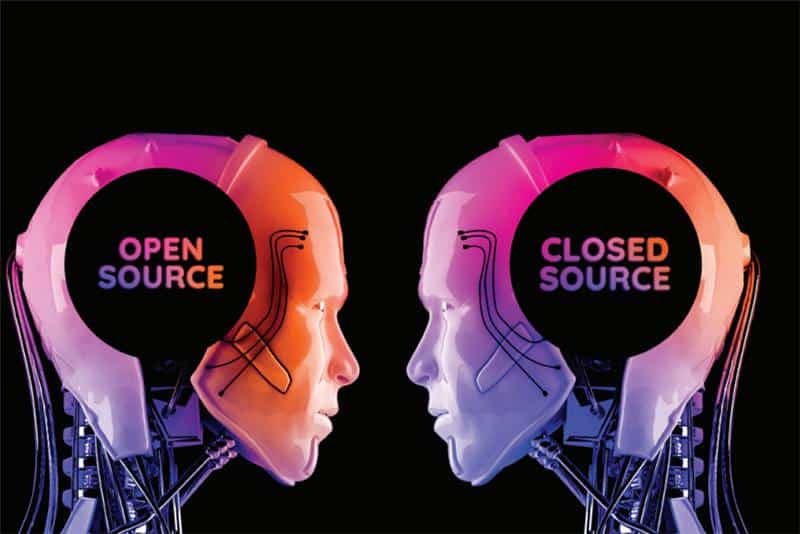
Every few years, a new AI debate divides the enterprise world. This time, it’s open versus closed. Each side insists it holds the key to progress — open-source advocates champion transparency and freedom, while closed-platform loyalists point to accuracy and speed to market. But the real divide isn’t technical. It’s between those still choosing and those already orchestrating. Closed models bring scale, compliance, and reliability to areas where accuracy is essential. Open models deliver adaptability, privacy, and cost efficiency for use cases that depend on flexibility and tailored performance. The advantage in enterprise AI no longer comes from choosing between open and closed models, but from orchestrating both within an ecosystem that aligns each decision to business risk, regulation, and opportunity. Those who learn to operate across this spectrum will not only keep pace with AI’s evolution but define it. From Debate to Design The open-versus-closed debate has framed enterprise AI for years, but the fundamental transformation is happening elsewhere. Closed systems from providers like OpenAI, Anthropic, or Google Gemini offer precision, speed, and scalability without demanding deep technical resources. Open or in-house models such as Llama, Mistral, or Falcon offer something different: control, transparency, and the ability to adapt AI capabilities to proprietary data and processes. Each approach has merit, but focusing on which is “better” obscures the real work that matters. McKinsey & Company found that more than half of surveyed organizations now use open-source AI technologies alongside proprietary tools from providers such as OpenAI, Google, and Anthropic¹, confirming that coexistence, not exclusivity, is becoming the norm. Most organizations already live in a hybrid AI reality but govern it as if the divide still exists. They govern open and closed models separately, even when they serve the same customers, process the same data, and power the same outcomes. The result is friction: duplicated oversight, inconsistent trust models, and wasted potential. Leaders must learn to balance performance with compliance, and innovation with accountability. That balance doesn’t come from alignment; it comes from orchestration. From Models to Portfolios: Building for Balance Forward-looking enterprises now treat their AI ecosystems like portfolios, balancing precision, control, and cost by governing open and closed models together to combine compliance with innovation. Closed models offer stability and scale for mission-critical workloads where reliability and accuracy are non-negotiable. Open models deliver flexibility and deeper integration, where customization creates differentiation. Orchestration is where that balance becomes operational. It’s how leaders turn coexistence into capability, managing models as a unified operating system for insight and decision-making. What Effective Orchestration Looks Like in Practice Focus Area Common Misstep What Effective Leaders Do Enterprise Impact Model Strategy Treats open and closed models as competing investments. Aligns model choice to business context, such as precision, risk, and data sensitivity. Reduces redundancy and strengthens control where it matters most. Governance Applies separate oversight to vendor and in-house models. Creates unified governance spanning all AI systems, data, and vendors. Maintains compliance while enabling faster adoption. Integration Deploys models as standalone tools. Connects them through shared pipelines, APIs, and workflows. Scales insight and capability across the enterprise. Measurement Tracks success through accuracy or cost metrics alone. Links outcomes to business KPIs such as efficiency, revenue, and trust. Makes AI a measurable contributor to enterprise performance. Leaders who move from managing AI models to orchestrating them build systems that scale responsibly, combining trust, control, and measurable impact. What Leaders Need to Build To make orchestration work at scale, leaders must strengthen three existing disciplines that turn coordination into capability. From our work with enterprises across regulated and innovation-driven sectors, Tavant has seen how these disciplines transform orchestration from an abstract concept into a repeatable operating model. They’re not new pillars of strategy but the operational foundations that allow orchestration to take root across the enterprise. Together, they extend the principles above from governance design to execution. Interoperability – Design architectures where multiple models can coexist, share data, and connect seamlessly into enterprise workflows. This ensures adaptability as the model landscape changes. Trust and Governance at Scale – Establish oversight across all models, regardless of source. Implement review processes and controls for security, ethics, and compliance. Governance becomes the enabler of speed, not its obstacle. Value Alignment – Define measurable outcomes for every AI deployment, from cost reduction to cycle-time acceleration to customer retention. When tying model choice to value creation, orchestration becomes a business strategy, not a technical one. These are the same competencies many organizations already practice in cloud or data transformation. Orchestration demands these disciplines operate together, consistently and continuously. What to Do Now For enterprises beginning to mature toward orchestration, a few near-term steps can align governance, integration, and measurement without disrupting existing investments: Audit your AI landscape: Identify where closed and open models coexist and where gaps or risks may lie. Pilot hybrid governance: Build internal capability in model operations, integration, and governance to connect diverse models seamlessly. Plan for flexibility: Expect constant pricing, regulation, technology, and design evolution so models can be swapped or scaled without disruption. These actions make orchestration a repeatable capability that strengthens as leadership commitment deepens and AI becomes part of the enterprise fabric. From Selection to Orchestration Enterprise AI is entering a new phase, defined not by the strength of individual models but by the cohesion of the systems that connect them. The advantage lies with those who can orchestrate open and closed systems as one adaptive ecosystem, turning complexity into clarity, and AI into measurable impact. References ¹ McKinsey & Company. (2025, April). Open Source in the Age of AI. Retrieved from https://www.mckinsey.com/capabilities/mckinsey-digital/our-insights/tech-forward/open-source-in-the-age-of-ai Download the Article
From Developer Assistant to Copilots as Teammate: Unlocking the True Power of GenAI Enabled Software Development

The Fear That Misses the Point Every major technological shift creates anxiety. In software development, that anxiety now centers on AI: the belief that code will soon write itself and developers will become obsolete. While this sparks fears among developers, it can sound appealing to companies because technology costs will fall, or throughput will skyrocket. But both framings miss the real story to unlock the true power of GenAI-enabled software development. The real unlock lies in redesigning how software is built — with hybrid human–agent teams that amplify each other’s strengths. In practice, humans and AI agents work side by side, each with defined roles in a shared chain of activity that multiplies productivity. Developers remain central as the demand for software and models grows, but organizations can accomplish far more at the same cost. This evolution moves beyond AI-assisted coding to reimagining development as a collaborative process between people and intelligent systems. In many ways, the shift from assistance to collaboration unlocks innovation and throughput that no technology alone can achieve. For executives, the opportunity is not to automate people out of the process but to rethink how work happens when intelligent systems are part of the team. Those who make that leap, designing for hybrid human–agent collaboration, will define the next era of productivity and innovation in software development. Let’s explore this further. From Tools to Teammates The first phase of AI in programming treated copilots as more innovative tools that generated snippets, filled in boilerplate, and sped up repetitive tasks. It improved efficiency but did not improve productivity or how developers built software. Developers testing and enhancing code that they didn’t write posed challenges. The next wave introduces AI agents acting as team members, not merely tools to assist. They can test, deploy, monitor, and resolve issues without direct instruction, reshaping how organizations design, deliver, and scale software. With developers in hybrid teams, AI agents take on the structured, repeatable work so humans can focus on strategy, design, and business alignment. The interaction between the two—how humans delegate, oversee, and learn from agents—becomes the new driver of productivity and innovation. However, it requires the role of the developers to be redesigned and the AI agent to be explicitly considered a role itself. McKinsey’s 2024 Navigating the Generative AI Disruption in Software report found that generative AI can increase developer productivity by 35 to 45 percent¹. The most significant impact was elevating human engineers to focus on system design and architectural quality, the higher-order work defining long-term competitive advantage. From Coding to Orchestration For decades, human bandwidth limited software development by how much code a person or team could write, review, and reason about. Agents remove that constraint. As AI systems begin to manage entire workflows, programming evolves into orchestration. Developers spend little or no time typing code and more time defining intent, reviewing outcomes, and guiding AI systems through feedback. That transition requires a cultural and organizational shift from performing tasks to designing how work gets done. One global enterprise recently ran an internal exercise requiring its engineers to build a functioning gaming application through agent instructions. The goal wasn’t to prove efficiency but to rewire how people think about delegation and collaboration with intelligent systems. This needs to happen at scale to move developers into a new role, next to the roles that AI agents will take. Successful organizations will train teams to structure goals and constraints and check so that intelligent systems deliver results reliably. Cracking the code no longer defines success for developers. Managing and systems architecting does. Every developer oversees a team of agents—a powerful multiplication when the demand for software and models ever expands. The New Layer in the Stack: People and Agents Most organizations still consider their software stack a collection of technologies — language choices, frameworks, tools, middleware, and infrastructure. However, in the age of AI agents, that definition is incomplete. The modern stack must also include an explicit design of agents working alongside humans- not only connected and orchestrated among themselves but deliberately integrated with the technical layers that drive outcomes. UI, Software Middleware, Architecture Agents, People, Processes define intent, standards, and strategy / Agents execute, monitor, and adapt / Processes connect the two through governance and feedback. Infrastructure, Data Architecture When these layers are designed intentionally, every interaction between humans and agents becomes an opportunity to learn and improve. Each collaboration reinforces institutional knowledge, strengthens system behavior, and increases business resilience. Work doesn’t just move faster — it becomes smarter. That’s the new organizational advantage: the ability to continuously learn and scale through hybrid human–agent collaboration. This compounding loop of feedback and adaptation sets the stage for the next challenge: how leaders design workflows, governance, and culture to make hybrid teams operational. Leadership Imperatives for the Hybrid Era This transformation is not a technology project; it’s an organizational redesign. Success depends on how effectively leaders re-architect work, roles, and culture to operate with human–agent teams. Redesign Workflows for Hybrid Teams: Most software development and management workflows still assume humans own every step. Leaders should identify where agents can safely take on structured, repeatable loops—from coding and testing to documentation, operational reporting, and self-healing. Clearly define and monitor responsibilities, treating agents as distinct team members. The key question is no longer how AI can assist humans, but where can humans stop doing what AI can now handle reliably, with agents embedded as full participants in end-to-end workflows? Invest in System-Thinking Skills: As agents take on execution, the human advantage shifts toward reasoning across systems. Teams must learn to design outcomes, not outputs. Leaders should build fluency in orchestration, governance, and validation across intelligent systems. These capabilities form the new literacy of software creation. They require an upskilled breed of developers who architect, reason, and instruct rather than code. Rebuild Governance Around Feedback, Not Control: Traditional governance relies on static checkpoints and manual reviews that slow the pace and stifle innovation. Replace rigid oversight with adaptive, event-driven monitoring and