

From Dirt to Data: How Precision Farming is Changing Agriculture Forever
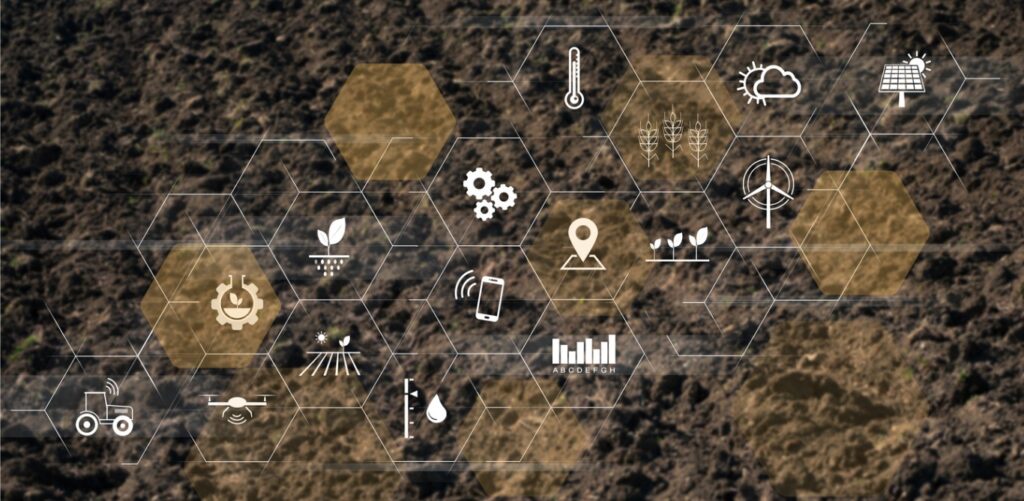
Today’s agriculture has long evolved past manual labor and traditional farming. The journey to increased efficiency and productivity has led to exponential technological growth within the agricultural ecosystem. One of the most significant changes in recent years has been the rise of precision farming, also known as precision agriculture. This data-driven approach to crop management has revolutionized how we grow and produce food, making it more sustainable, precise, and profitable. The blog explores how precision farming is changing the face of agriculture and why it is here to stay. The Dawn of a New Era in Farming: Understanding Precision Agriculture: Imagine a world where farmers can monitor the health of their crops, detect nutrient deficiencies, and even predict weather patterns with precision. Precision agriculture breathes life into this very concept, turning it into reality. Technology transforms how we grow food, ushering us into the new farming era. Precision agriculture optimizes crop production by combining cutting-edge technologies like drones, sensors, and data analytics. These technologies allow farmers to collect real-time data on soil conditions, moisture levels, and pest infestations. This information enables them to make informed decisions, improve resource allocation, and minimize waste. But precision agriculture is not just about efficiency. It also has a significant environmental impact. By using precise amounts of fertilizers, water, and pesticides, farmers can reduce their carbon footprint and protect ecosystems. The dawn of precision agriculture marks a shift towards a more sustainable and profitable future for farming. It is an exciting time to be a farmer as technology revolutionizes how we feed the world. The Digitalization of Crop Management: How Data Plays Its Part The digital age has made data an invaluable resource in modern agriculture. Precision farming has paved the way for the digitalization of crop management, harnessing data’s power to revolutionize how farmers approach their work. Farmers can now utilize advanced technologies to gather real-time crop data, including soil conditions, moisture levels, and pest infestations. This vast amounts of information allow them to make data-driven decisions, optimizing resource allocation and minimizing waste. The digitalization of crop management is not just about collecting data; it’s about using that data to drive actionable insights and improve agricultural practices. By leveraging technology and data analytics, farmers can identify patterns and trends, allowing them to make informed choices about irrigation, fertilization, and pest control. This level of precision and accuracy enhances productivity and promotes sustainability by minimizing resource usage and reducing environmental impact. In short, the digitalization of crop management is transforming agriculture by giving farmers the power of data. This data enables them to make more informed decisions, increase efficiency, and ultimately contribute to a more sustainable and profitable future for farming. Real-Life Impacts of Precision Farming on Modern Agriculture Precision farming has profoundly impacted modern agriculture, bringing numerous real-life benefits, including increased crop yield and quality. One critical impact is that farmers can optimize irrigation, fertilization, and pest control with precise monitoring and data-driven decision-making, resulting in healthier and more abundant crops. It allows for increased food production with fewer resources, helping farmers address the global challenge of feeding a growing population. Precision farming has also made agriculture more sustainable. Using sensors and data analytics, farmers can identify areas of their fields requiring less water or fertilizer, thereby minimizing waste and reducing the environmental impact. Additionally, precision agriculture allows for targeted pest management and promotes biodiversity by reducing the need for harmful pesticides. Another significant impact of precision farming is improved farm management and financial stability. By having access to real-time data on crop conditions, farmers can proactively address issues and prevent losses, thereby saving money and assuring a stable income. Precision farming is revolutionizing modern agriculture by improving crop yield, sustainability, and farm profitability. It is a game-changer that will continue to shape the future of agriculture. Future Predictions: What’s Next for Data-driven Agriculture? The future of data-driven agriculture holds even more exciting possibilities for farmers and the industry. The continuous advancement of data analytics and technology ensures precision farming will become even more precise and efficient in the coming years. Here are a few predictions for what’s next: Artificial Intelligence Integration: As AI technology evolves, we can expect to see it integrated into precision farming systems. AI algorithms can analyze large datasets, identify patterns, and make autonomous decisions, further optimizing crop management. Internet of Things (IoT) Expansion: IoT devices, such as sensors and drones, will likely expand, allowing farmers to collect even more detailed and real-time data. IoT devices will provide a more comprehensive understanding of crop conditions and enable proactive decision-making. Predictive Analytics for Climate and Pest Control: Farmers can accurately predict climate patterns and pest outbreaks by leveraging historical and real-time data. Predictive analytics enables a more proactive approach, reducing the reliance on pesticides and mitigating potential crop losses. Integration with Robotics: The integration of robotics into precision farming will continue to increase. Robots can now handle tasks such as planting, harvesting, and weed control with precision and efficiency, reducing the need for manual labor. Blockchain Implementation: Blockchain technology has the potential to revolutionize the agricultural industry by optimizing the supply chain and ensuring transparency and traceability. Blockchain can enhance consumer trust and enable farmers to get fair product prices. The future of data-driven agriculture is exceedingly promising. As technology evolves, we can expect precision farming to become even more precise, sustainable, and profitable. Farmers will have access to more advanced tools and analytics, enabling informed decision-making that will further optimize crop management and contribute to a more sustainable future. It is an exciting time to be a part of the agriculture industry as we witness the continued transformation of farming through data-driven innovation.
AI in Agriculture: Key Trends

In the vast expanse of agriculture, where every seed planted carries the weight of feeding a growing global population, the infusion of Artificial Intelligence (AI) has sparked a revolution. As we stand at the cusp of a new era, the future of AI in agriculture technology promises to redefine how we cultivate, monitor, and sustain our crops. This blog delves into the exciting prospects that lie ahead as AI takes center stage in agriculture. Precision Farming 2.0 AI is poised to take precision farming to higher levels as technology evolves. Advanced sensors, drones, and satellite imaging fueled by machine learning algorithms will provide farmers with unparalleled insights into their fields. These technologies will assess soil health and crop conditions and offer predictive analytics for more efficient resource management. Autonomous Farming Systems Picture a farm where tractors navigate the fields autonomously, sowing seeds with precision, and harvesters discerning the perfect moment to reap the rewards. AI-driven autonomous farming systems are on the horizon, minimizing labor costs, optimizing workflows, and increasing efficiency. The result? Increased productivity and reduced environmental impact. AI in Crop Breeding and Genetic Enhancement The marriage of AI and genetic science holds immense promise for crop improvement. Analyze vast genomic datasets, accelerating the identification of desirable crop traits through machine learning algorithms. Genetic enhancement expedites the development of hardier, more resilient varieties and facilitates the creation of crops tailored to specific environmental conditions. Climate-Smart Agriculture AI is becoming a significant tool in adjusting to the climate changes impacting agriculture practices. Smart irrigation systems, informed by real-time weather data and soil moisture sensors, will optimize water usage. AI algorithms will help farmers anticipate and mitigate the impacts of climate-related challenges, ensuring sustainable and resilient farming practices. Computer Vision Computer vision is redefining agricultural practices by enabling detailed monitoring of crop health, precise weed detection, and automated fruit picking through high-resolution imaging and AI analytics. This technology facilitates early pest detection and disease diagnosis, ensuring timely intervention. By analyzing plant growth patterns and detecting anomalies, computer vision systems optimize irrigation and fertilization, significantly increasing efficiency and yield while reducing resource waste. Generative AI Generative AI is revolutionizing agriculture by simulating environmental impacts on crop yields, creating virtual models for optimal farm designs, and accelerating crop breeding processes. It assists in developing climate-resilient crop varieties by predicting the outcomes of genetic modifications, thereby reducing trial and error. Additionally, Generative AI can optimize planting strategies and predict future food demands, ensuring food security and sustainability in agricultural practices. The future of AI in agriculture is not just a vision; it is a roadmap to a more sustainable, efficient, and resilient global food system. As we embrace the potential of AI in agriculture, it is imperative to navigate the ethical landscape carefully. Responsible AI deployment involves addressing algorithmic bias, data privacy, and the impact on rural communities. Finding the right balance between ethical consideration and technological advancement is crucial for a sustainable and inclusive agricultural future. As we plant the seeds of change, we’re poised to reap a harvest of unprecedented productivity, sustainability, and abundance. While we cultivate tomorrow’s fields, the symphony of artificial intelligence orchestrates them.